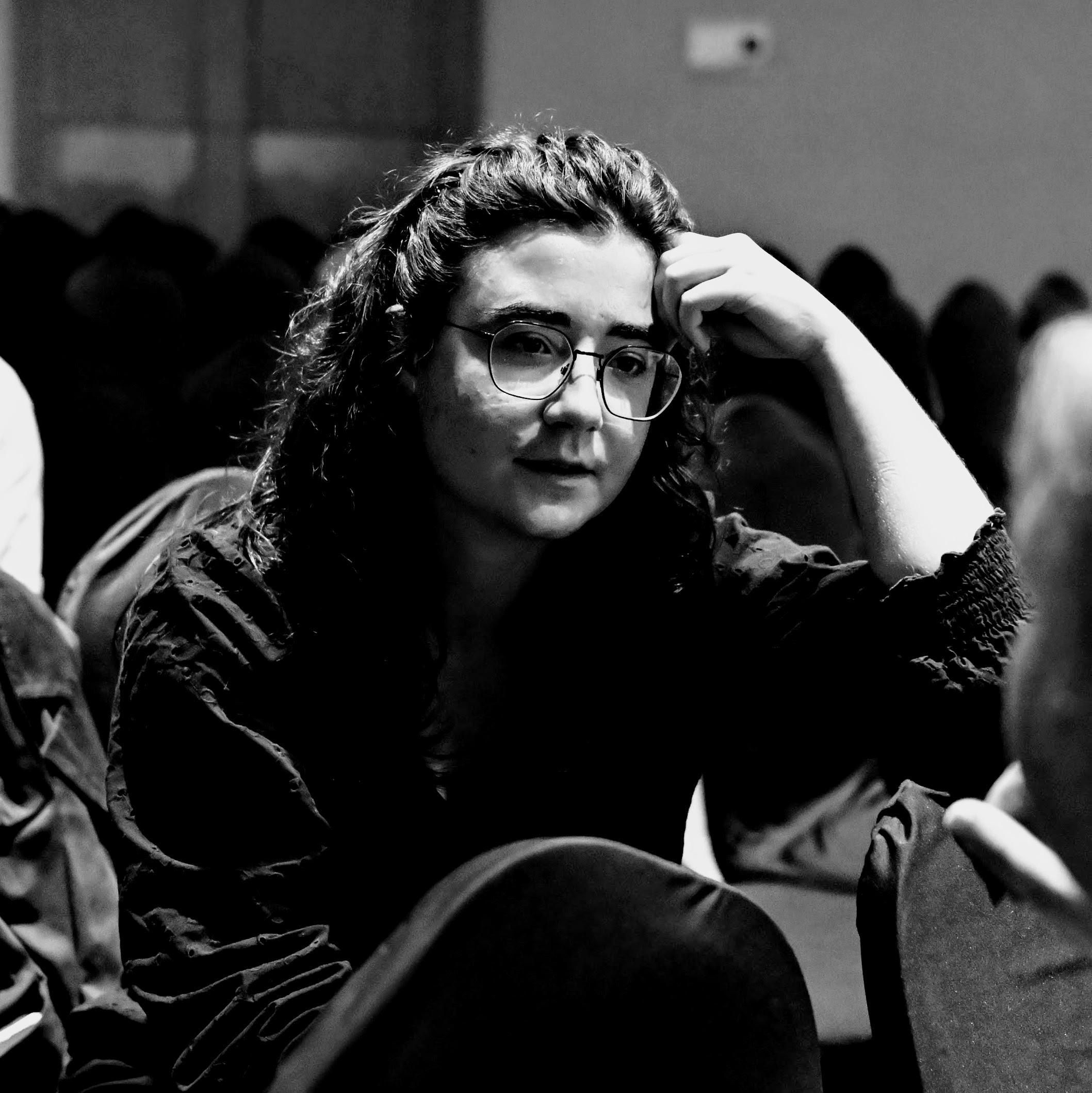
Welcome
“‘So who made the machines? That’s who we want to contact.’ ‘They made the machines. That’s what I’m trying to tell you. Meat made the machines.’ ‘That’s ridiculous. How can meat make a machine? You’re asking me to believe in sentient meat.’” - They’re Made out of Meat (Terry Bisson, 1991)
I am a PhD candidate in the department of Cognitive and Information Sciences at the University of California, Merced. I graduated Phi Beta Kappa, Sigma Xi, and Psi Chi from Vassar College in Cognitive Science and Philosophy.
My research uses neural networks, complex and dynamical systems, and information theory to develop computational models of coordination in human joint action and collective intelligence more broadly. Drawing from cognitive science, connectionism, and dynamical systems theory, I use my models as a springboard for examining the emergence and evolution of efficient, distributed information processing in both natural and artificial intelligences.
Things I think about…
In addition to my primary research, I entertain a variety of secondary interests, including:
Philosophy of modeling. How do the formal models posited by scientists function differently from the “models” of the world we naively adopt when we speak a certain language or participate in a certain scientific tradition? What hermeneutic problems illuminated by metaphilosophy and philosophy of science arise too in our efforts to develop computational models of natural phenomena?
Rationality, dialectics, and the hermeneutic circle. What mechanisms have guided human inquiry across times and cultures? How do belief systems warp and transform through the introduction of new traditions and discoveries? How do humans overcome paradoxes of learning and the problem of ostension to arrive at new (and shared) knowledge?
Intellectual histories and the development of scientific fields. How do fields develop their questions, methods, and concepts, and how do these intellectual tools diverge and converge across fields over time? How can returning to foundational works reveal connections or alternative research trajectories obscured by subsequent developments?
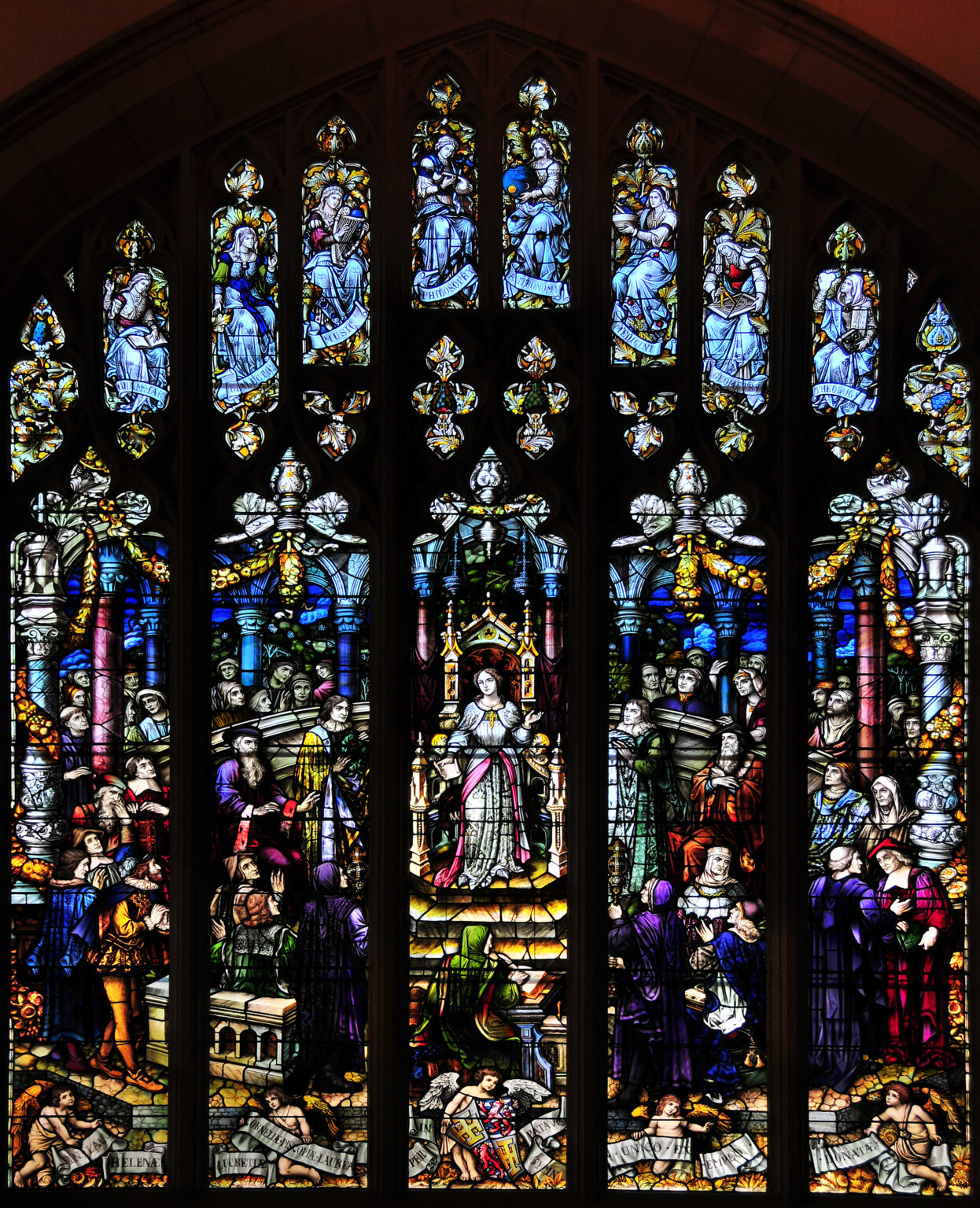
I spent much of my college years admiring The Cornaro Window, featured in Vassar’s Thompson Memorial Library.